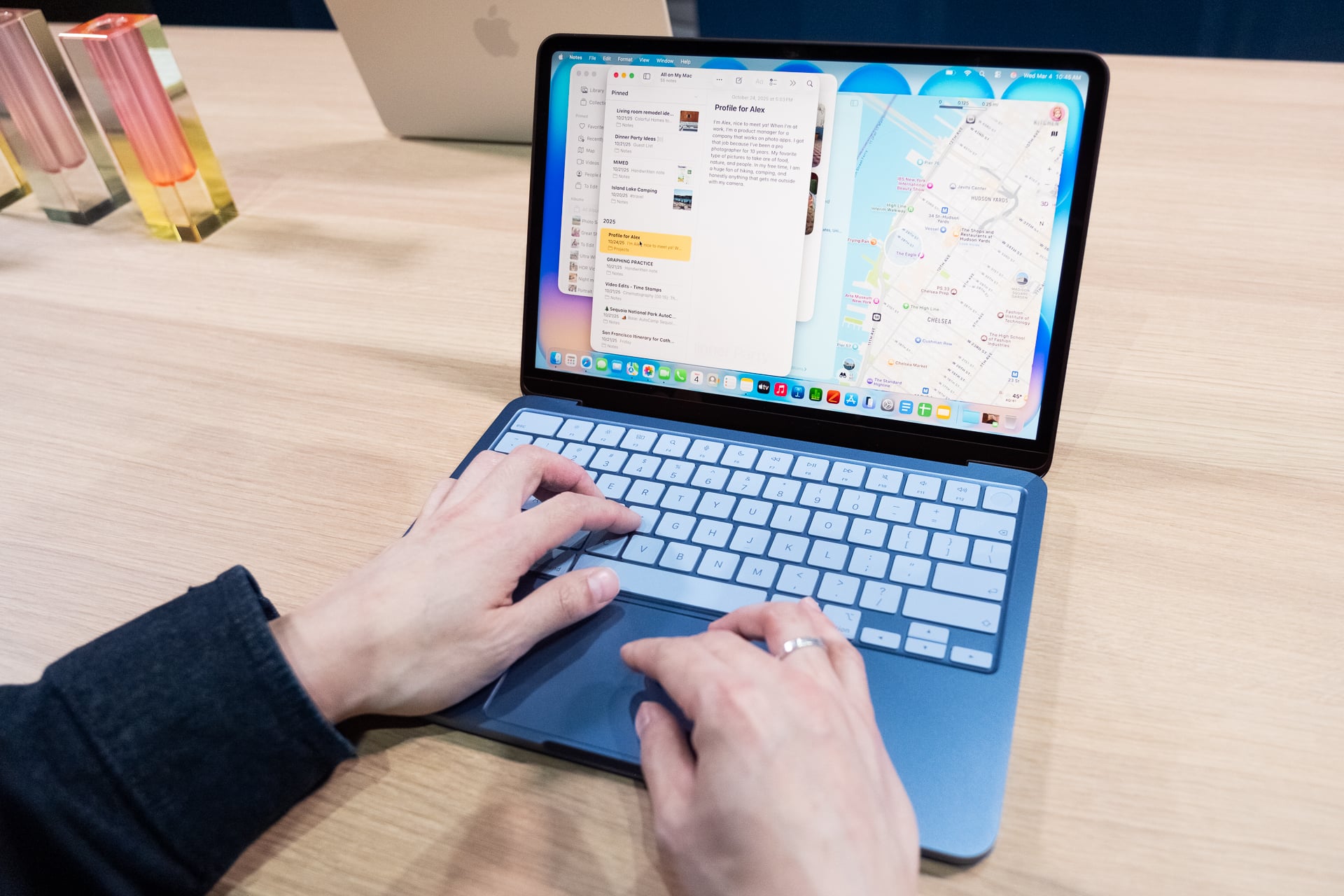
The PC industry does not have a direct competitor for Apple’s hit $600 MacBook Neo—at least not yet. Intel’s latest low-end chips may provide PC makers their best opportunity to strike back at Apple, but it won’t be easy. Apple’s competitors will need to do more than focus on pure budget performance to offer something as appealing as the Neo’s design.
The MacBook Neo has “only” 8GB of unified memory and runs on an iPhone chip, the A18 Pro. Despite that, it’s become one of the hottest-selling laptops of the year. To punch back at Apple, Intel dropped details on its new Wildcat Lake processors earlier this month. They’re built on the same Intel 18a process node as the company’s Panther Lake chips, aka the latest Intel Core Ultra Series 3 chips you’ve probably seen in a ton of laptops already this year.
First look at an Intel Wild Cat Lake laptop in the wild. 2 Cougar Cove P + 4 Darkmont E cores 17 W PL1 and 35 W PL2 / 22 W PL1 Max / 11 W fanless
17 TOPS NPU
2 Xe cores
Thin and light design
Looks like a perfect laptop for the beach, innit 🌊🏖️ pic.twitter.com/MCsCVbpM4A— Vaidyanathan S (@Geeky_Vaidy) April 23, 2026
No, we don’t yet have a Wildcat Lake laptop to compare with the MacBook Neo. However, Notebookcheck managing editor Vaidyanathan Subramaniam shared images of an early reference laptop that Intel presented at a showcase in India. The chip inside that laptop features two Cougar Cove P (performance) cores and four Darkmont low-power E (efficiency) cores. It’s backed by two Xe3 GPU cores and a 17 TOPS NPU, built for minute background AI tasks. The chipmaker said processors like the Intel Core 7 360 promise between 20% and two times the performance in some benchmarks compared to previous-gen Intel Core 7 150U low-end chips.
Whether that’s enough to take on Apple’s A18 Pro chip, first featured in the iPhone 16 Pro, is an open question. But that reference laptop in the pictures is already appealing thanks to the soft cyan to white gradient on the laptop lid. A major aspect of the MacBook Neo’s appeal is its subtle pink, indigo, and yellow tones. A colorful chassis is like catnip to anybody tired of the same old silver or black shell.
Windows PCs are no longer cheaper than Macs
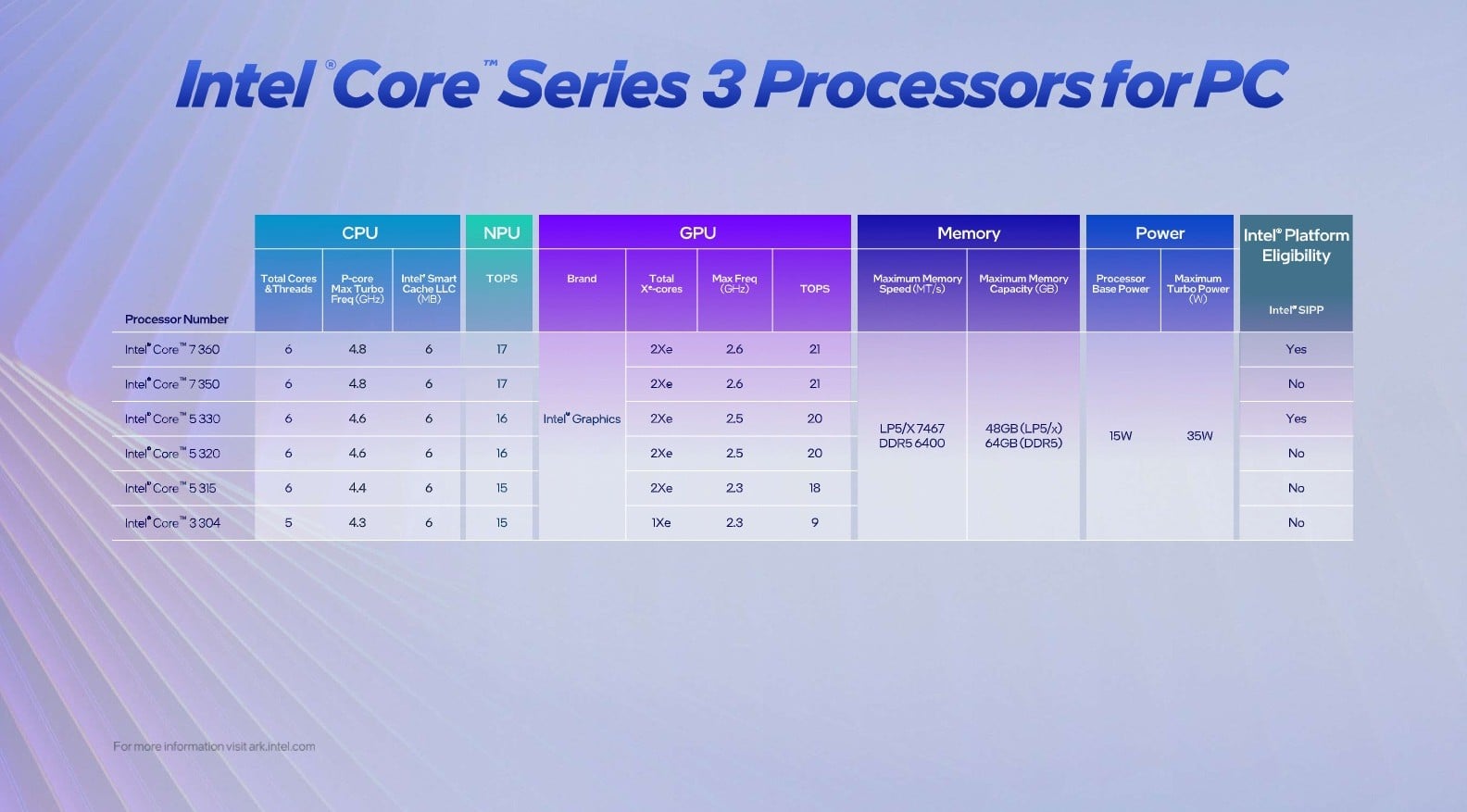
Intel’s general manager of consumer PCs, Josh Newman, said during the launch of Core Series 3-powered laptops that they were designed for “value-oriented computing with exceptional battery life” for use in schools or small businesses. All the major PCmakers have promised Wildcat Lake PCs from existing or future laptop lines. Most of these are retreads of existing productivity-class laptops with dull gray shells. Sleek “cosmic blue” devices like Lenovo’s Ideapad Slim 5i currently cost $900. An upcoming version with a Qualcomm Snapdragon X2 Plus chip will demand $850.
Wildcat Lake is designed to be cheap. For the first time in years, Intel is not in a financial hole. The chipmaker proclaimed it was its latest Panther Lake chips that made this last quarter a success. But Intel Core Series 3 PCs are some of the most expensive lightweight laptops you can buy today. You can’t make a PC with a premium-feeling aluminum chassis, quality screen, powerful speakers, and solid controls and still cost $600 without a relatively inexpensive chip. At the same time, any PC that hopes to reach the MacBook Neo’s price will have to take into account the cost of a Windows 11 license as well, which can add more than $100 to a product’s price tag.
Anshel Sag, a PC industry analyst of Moor Insights & Strategy, told Gizmodo over email that Intel’s new chips are Windows PCs’ “best chance” against the MacBook Neo. “The memory crunch has completely changed the equation in the low end of the market so much so that I believe entire categories could disappear,” he said. He added that 18A yields are “improving,” and Panther Lake and Wildcat Lake may be more available “if Intel doesn’t reallocate even more 18A capacity” for datacenters and servers.
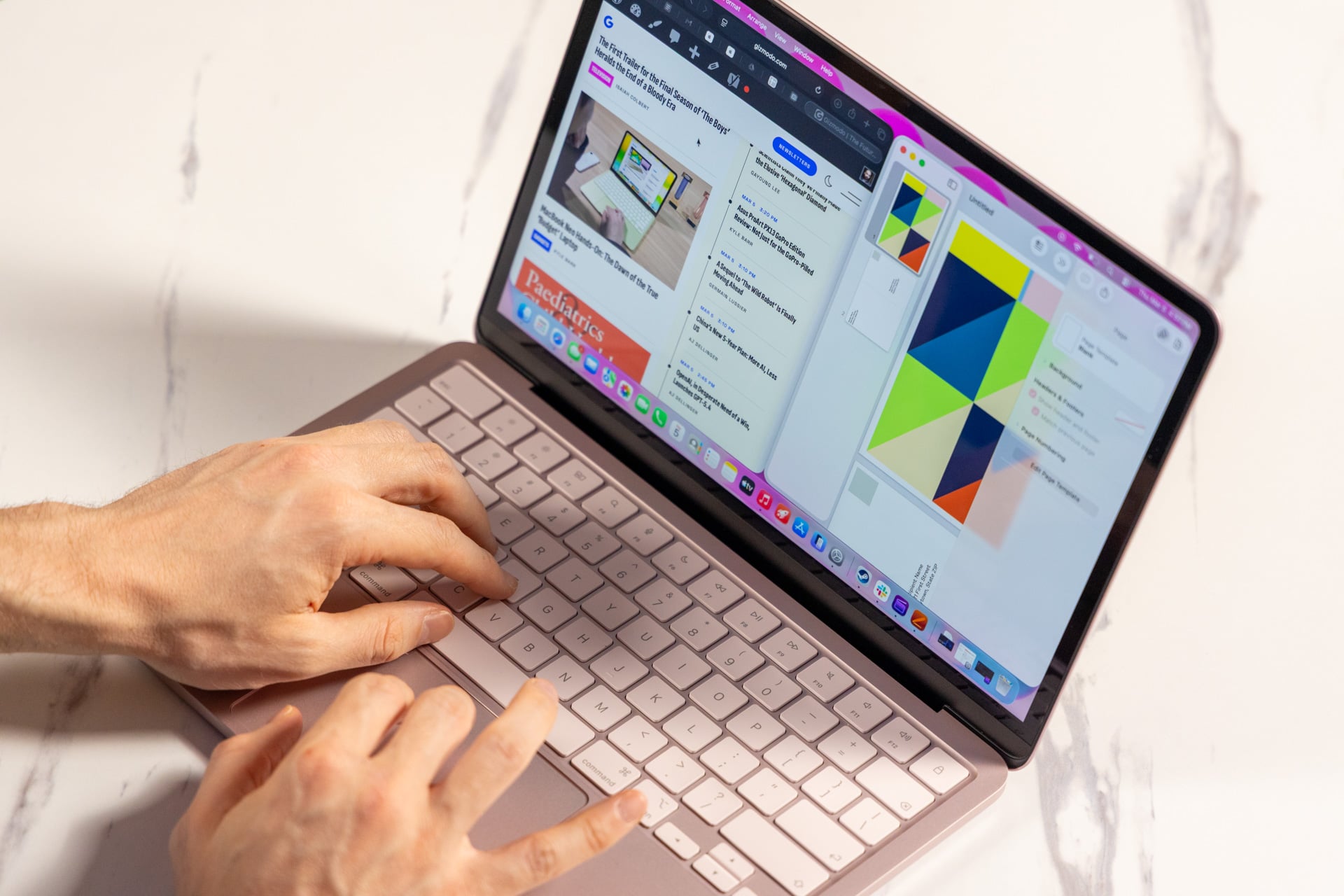
Apple has vertical integration on its side. Using leftover iPhone 16 Pro chips with the A18 Pro let the tech giant funnel those savings into a better-feeling laptop. Because of its dominating position in tech, Apple has more leverage over its memory suppliers. Major PC makers like Lenovo, Dell, and Microsoft itself have hiked prices across their gaming and productivity platforms, all thanks to the spiking cost of RAM.
We may not have to wait long to see Wildcat Lake in action. The annual Computex tech conference in Taipei, Taiwan, is around the corner. We may see the new generation of super-cheap PCs from brands like Dell. Time will tell. The eventual price of these upcoming devices will tell us more.